
Estimated reading time: 5 minutes
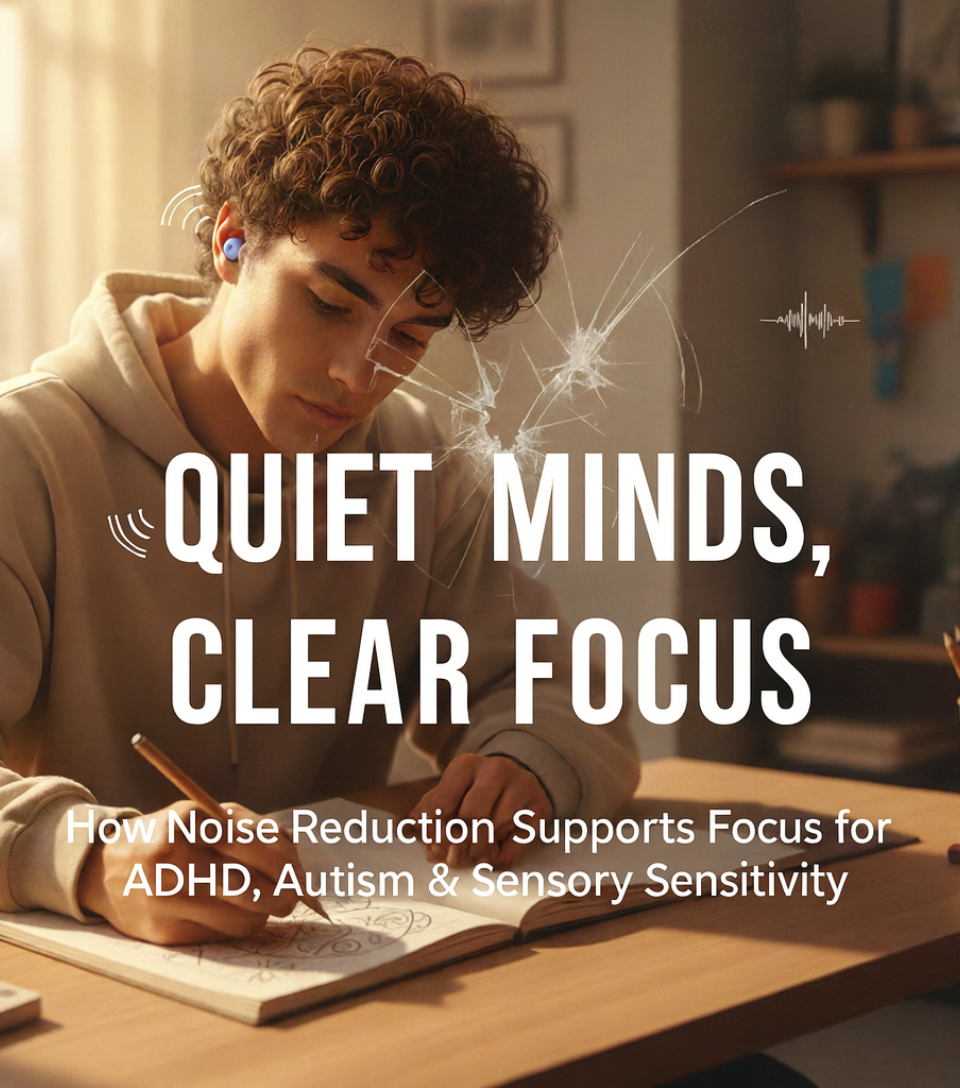
For many neurodivergent individuals, noise isn’t just distracting, it’s overwhelming. Sound sensitivity is common among people with ADHD and autism, and even ordinary environments can feel unpredictable or difficult to manage.
Noise-reduction tools aren’t about shutting the world out. They help create a more controlled, predictable environment where the mind feels safer and calmer.
Why Noise Can Be Overwhelming
The brain is constantly filtering information. In neurodivergent individuals, the filtering system can work differently, meaning:
- Background noise feels “too loud”
- Sudden sounds feel physically uncomfortable
- Concentration becomes harder
- Sensory overload happens faster
- Fatigue builds throughout the day
Even everyday settings, a café, university accommodation, a workplace, a train — can become exhausting.
How Noise-Reduced Environments Help
Reducing sound provides:
1. A calmer nervous system
When noise is softened, the fight-or-flight response eases, giving the brain room to regulate better.
2. Improved focus
Schoolwork, revision, and deep concentration become easier when the environment is more predictable.
3. Greater sense of control
Being able to manage your sound environment brings confidence and emotional stability.
4. Less sensory overwhelm
Lower volume = gentler sensory input, which helps prevent overload and shutdowns.
Why Earbuds Are Often Preferred to Over-Ear Headphones
Many neurodivergent users find earbuds more comfortable because:
- They feel less restrictive
- They’re lighter
- They reduce sound without isolating completely
- They’re suitable for classrooms or public spaces
- They don’t cause heat or pressure on the head
Low-profile silicone earbuds are particularly useful for people who dislike bulky designs.
Real Moments Where They Make a Difference
- Studying in a noisy dorm
- Revising in cafés
- Commuting on crowded buses
- Working in open-plan offices
- Managing background sound during lectures
- Finding calm in overstimulating spaces
- Settling down for sleep in shared accommodation
These small improvements can add up to a better day, and a clearer mind.
Calm Is a Tool
Noise reduction isn’t a cure for sensory overwhelm, but it’s a tool that helps many people feel safer, more grounded, and more capable in their day-to-day lives.
Creating a calmer environment, whenever and wherever it’s needed, gives neurodivergent individuals more room to thrive.

Leave a comment
This site is protected by hCaptcha and the hCaptcha Privacy Policy and Terms of Service apply.